
Materials · Polypropylene
Polypropylene (PP) Spray Nozzles
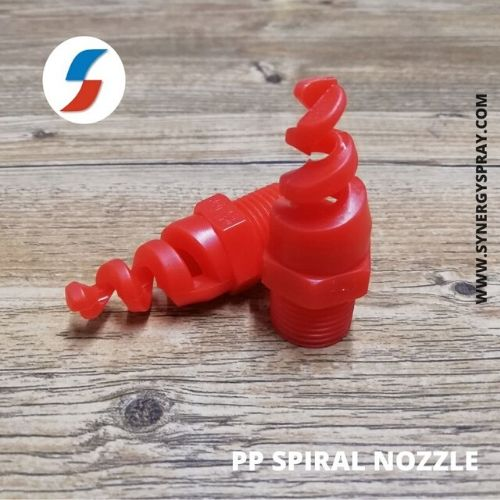
Polypropylene is the workhorse plastic for spray nozzles: chemical resistant, light, tough and affordable. We make PP nozzles in every common pattern and size.
- Resists most acids, alkalis and salts
- Spiral, full cone, hollow cone and flat fan
- All types and sizes, made in India
 Polypropylene
Overview
Why polypropylene?
PP is a thermoplastic with excellent resistance to a wide range of chemicals, which makes it the first choice for scrubbers, effluent treatment, pretreatment lines and agricultural spraying. It is much lighter and cheaper than metal nozzles and does not rust.
PP's main limits are temperature and strong oxidisers or solvents. For hotter liquids or more aggressive chemicals we offer PVDF, and for low-cost water duties PVC. See the material comparison below or read our plastic nozzle material guide.
Typical applications
- Scrubbers and cooling
- Effluent treatment
- Pretreatment and washing
- Agricultural spraying
- Dust suppression
- Tank mixing
Benefits
Why choose our polypropylene (pp) spray nozzles
Chemical resistant
Handles most acids, alkalis and salt solutions.
Rust-free
No corrosion in wet, saline or chemical service.
Lightweight
Easy on headers, booms and drones.
Low cost
Moulded in volume for a competitive price.
Made in India
Manufactured with quality checks on every batch.
All patterns
Spiral, full cone, hollow cone and flat fan.
Specifications
Technical details
| Material | Polypropylene (PP); glass-filled PP for clip-on bodies |
|---|---|
| Patterns | Spiral, full cone, hollow cone, flat fan |
| Connections | Threaded, clip-on (pipe clamp) and quick-connect |
| Sizes | All types and sizes, made to order |
| Quality | High-grade manufacturing with quality checks |
Need a size or connection not listed? We make all types and sizes to order.
How to order
What we need for a quote
- Product and spray pattern
- Pipe size or thread connection
- Operating pressure
- Flow per nozzle or total flow
- Liquid and temperature
- Quantity and delivery city
Compare
PP compared with other nozzle plastics
| Material | Typical max. temperature* | Chemical resistance | Best for |
|---|---|---|---|
| Polypropylene (PP) | about 80°C | Most acids, alkalis and salts | General chemical, scrubbers, agriculture |
| PVDF | about 120°C | Very broad, incl. oxidisers and many solvents | Hot or aggressive chemicals |
| PVC | about 50–60°C | Good for water, many acids and alkalis | Low-cost cold water duties |
| Nylon (PA) | about 80°C | Good for oils and many solvents; weak with acids | Agricultural and wear-resistant parts |
| Acetal (POM, “Delrin”) | about 80°C | Good for neutral liquids and fuels; weak with strong acids | Precision, high-strength parts |
*Typical guide values. The safe limit depends on pressure, concentration and duty. Always share your chemical and temperature so we can confirm the material.
FAQs
Polypropylene (PP) Spray Nozzles: frequently asked questions
What is a PP nozzle?
A spray nozzle moulded from polypropylene, a chemical-resistant thermoplastic. PP nozzles are used in chemical, water treatment, pretreatment and agricultural spraying.
What temperature can PP nozzles handle?
PP is generally suited to liquids up to about 80°C, depending on pressure and chemical. For hotter service we recommend PVDF. Always tell us the operating temperature.
Is PP better than PVC for nozzles?
PP usually handles higher temperatures and a broader range of chemicals than PVC. PVC can be a lower-cost choice for cold water duties.
When should I choose PVDF instead of PP?
Choose PVDF for hot liquids, strong oxidisers such as chlorine or hypochlorite at higher strengths, and many solvents.
Do you make custom PP nozzles?
Yes. Send a sample, drawing or your requirements and we will advise on size, pattern and connection.
Related products
You may also need


Not sure which nozzle fits your line?
Tell us the liquid, pressure and coverage you need. A nozzle engineer will recommend the right type, size and material.